
How To Infuse Olive Oil With Herbs, Garlic, and Citrus

Olive Knowledge is a part of Amazon Associates. As an Amazon Associate, we earn from qualifying purchases. Read our Affiliate Disclosure to learn more.
Olive oil has a fantastic taste, even if you take a sip of pure olive oil. But you can also play around with the taste of olive oil by infusing it with various herbs and spices.
In this post, I’ll show you my favorite way of infusing olive oil with herbs and spices. I’ve done that several times, and every time the result was a beautifully tasting olive oil that I can use in the kitchen.
Key Takeaways:
- Making infused olive oil at home involves a simple, rewarding process.
- Choose high-quality extra virgin olive oil; Greek, Spanish, or Turkish oils recommended.
- Popular infusion herbs include garlic, chili, citrus peels, cannabis, and Mediterranean herbs.
- Infused olive oil enhances flavor in dishes, especially as dressings and marinades.
- Homemade infused olive oil can last up to 12 months; dry ingredients extend shelf life.
- Fresh, wet ingredients like raw garlic need refrigeration and a much shorter shelf life.
What Is Infused Olive Oil?
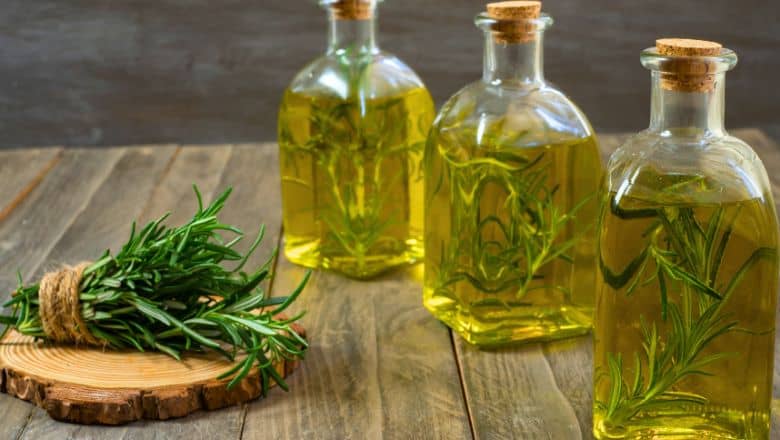
Infused olive oil is simply olive oil that has absorbed the flavors and aromas of other ingredients, such as herbs, spices, or even fruits. Think of it as a flavor-enhancing elixir; the olive oil serves as a base, soaking up the essence of these added elements. This process transforms the oil into a unique culinary ingredient that carries the signature flavors you’ve chosen to incorporate.
You’ll also see it sold as “flavored olive oil,” and for the most part the two words mean the same thing. The one distinction worth knowing: a true infused oil gets its taste from real ingredients steeping in the oil, while some cheap flavored oils on the shelf are made with aromas or essences added to a neutral, low-grade oil. Those are two very different products, and only one of them is worth your money.
Imagine drizzling garlic-infused olive oil over fresh bread or finishing a grilled steak with a splash of rosemary-infused oil. The possibilities are endless and entirely up to your taste. The beauty of infused olive oil lies in its versatility and the opportunity it offers for creative exploration in the kitchen.
One thing infusing doesn’t do is turn a bad oil into a good one. All of extra virgin olive oil’s polyphenols and health benefits come from the oil itself, not from what you put in it. The herbs add flavor. The oil does the heavy lifting.
How To Make Infused Olive Oil At Home
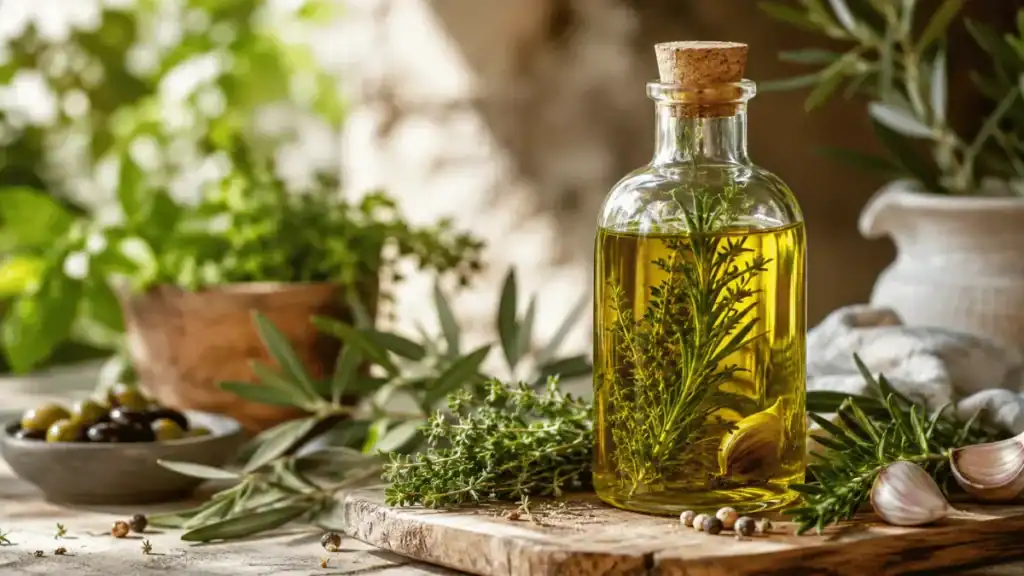
Creating your own infused olive oil at home is a simple, rewarding process. Here’s a basic guide for a cold approach that can be applied to any herb or spice you’d like to use.
- Select Your Olive Oil: I always recommend using high-quality extra virgin olive oil for infusions. Homemade olive oil from local farmers is an excellent choice if available. If not, olive oils from Croatia and Greece are my personal favorites, renowned for their exceptional quality and flavor profile.
- Clean And Dry Your Herbs or Spices: Thoroughly wash and dry your chosen herbs or spices. This ensures no unwanted particles end up in your infusion. Drying matters more than most guides admit — I’ll explain exactly why further down.
- Prepare the Jar: Use a clean glass jar with a tight lid. Make sure it’s sterilized to avoid any bacterial growth in your infusion.
- Place Your Herbs or Spices in the Jar: The amount you use depends on the intensity of flavor you desire. A good rule of thumb is to fill about one-third of the jar.
- Pour the Olive Oil: Fill the jar with your chosen olive oil, making sure all the herbs or spices are fully submerged. Anything poking above the surface will go off before the rest of the oil does.
- Seal and Store: Tightly seal the jar and store it in a cool, dark place. Let it sit for 10 to 15 days to allow the flavors to meld.
- Strain the Oil: Once your oil is infused to your liking, strain the oil to remove the herbs or spices. Use a fine-mesh strainer or cheesecloth for this. If you want a really clean, clear result, strain it twice — the second pass through a coffee filter catches the fine sediment that clouds the bottle.
- Store the Infused Oil: Pour your strained, infused oil into a clean, sterilized bottle. Store it in a cool, dark place. Here’s my guide on the best containers to store olive oil, so make sure to check that out.

Remember, the key to a high-quality infusion is starting with a high-quality olive oil. With this guide, you’re ready to create a delicious, personalized infusion that surpasses anything you’ll find on a store shelf.
Cold Infusion vs. Heat Infusion: Which Method Should You Use?
Use the cold method. It takes 10 to 15 days instead of an afternoon, but it protects both the flavor and the shelf life of your oil — and those are the two things you’re actually making this for.
Some enthusiasts prefer the method of heating the olive oil and herbs together to speed up the infusion process. While this does yield a faster result, I personally don’t recommend this method. The heat can degrade the quality of the olive oil and significantly reduce the shelf life of your infusion.
I advocate for the patience and natural flavor development that comes with the cold infusion. This approach may take a bit longer, but the superior flavor and extended shelf life make it well worth the wait.
There’s a second reason too. You’re presumably using a good extra virgin oil as your base — that’s the whole point. Warming it in a pan works against everything you paid for, and I’ve written separately about how heating olive oil affects its quality.
Here’s how the two methods compare:
| Cold infusion | Heat infusion | |
|---|---|---|
| Time to ready | 10–15 days | 2–3 hours |
| Flavor | Rounder, more layered | Faster but flatter, can taste “cooked” |
| Effect on the base oil | None — oil stays as it was | Heat degrades quality and aroma |
| Shelf life | Up to 12 months with dry ingredients | Usually up to 6 months |
| Effort | Almost none, just waiting | Active time at the stove |
| Best for | Anyone who plans ahead | Someone who needs it tonight |
If you genuinely need infused oil the same day, heat is your only option — just accept that you’re making a short-life product and use it within a few weeks.
How To Infuse Olive Oil With Garlic
Garlic-infused olive oil is the most popular infusion there is, and it’s also the one that needs the most care. Raw garlic is wet, and wet ingredients in oil are a genuinely different situation than dried herbs in oil.
You have three sensible options:
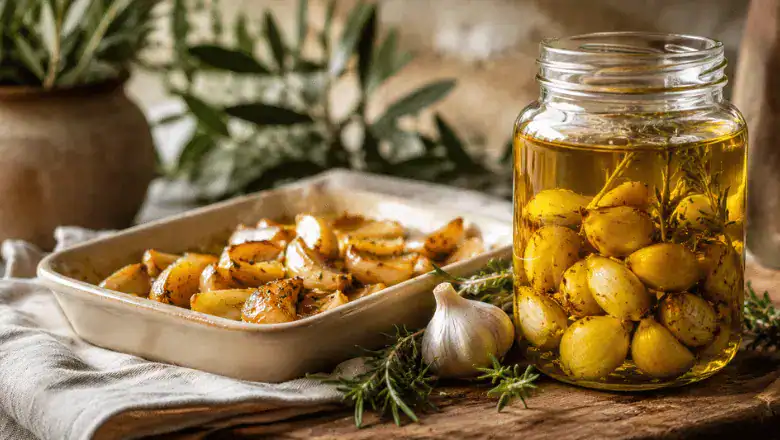
1. Roast the garlic first. This is what I do. Roasting drives off most of the moisture and, honestly, makes the flavor better — mellower and sweeter than raw garlic, which can turn harsh in oil. Roast whole peeled cloves at a low temperature until they’re soft and golden, let them cool completely, then proceed with the cold method above.
2. Use dried or dehydrated garlic. Less flavor than roasted, but the safest and longest-lasting option by a distance.
3. Use raw garlic, refrigerate, and use it fast. Fresh garlic in oil at room temperature is the one thing you shouldn’t do. Oregon State University Extension explains it plainly: garlic is a low-acid food, and submerging it in oil creates the oxygen-free environment that Clostridium botulinum needs. If you go this route, the jar lives in the fridge and you treat it like fresh food, not like a pantry item.
For a garlic oil that keeps, roasted is the sweet spot. For a garlic oil you’re going to pour over pasta on Thursday, raw and refrigerated is fine.
Is Infused Olive Oil Safe? (The Botulism Risk)
Homemade infused olive oil is safe when you use dried ingredients. The risk comes almost entirely from putting fresh, moisture-containing ingredients — garlic, fresh herbs, citrus peel, fresh chili — into oil and leaving the jar at room temperature.
The reason is simple. Oil itself won’t support bacterial growth, but the water inside fresh ingredients will. Sealed in oil, with no oxygen, that’s exactly the environment botulism spores like. It isn’t a common problem, but it’s a serious one, and the toxin has no smell or taste to warn you.
Penn State Extension lays out the safe approaches: dry your ingredients thoroughly, or acidify fresh ingredients before infusing using the method developed by University of Idaho researchers, or keep fresh-ingredient infusions in the refrigerator and use them within a few days.
My own rules, in order of how often I actually use them:
- Dry everything. Air-dry herbs for a week or two, or use a low oven for an hour or so. If a sprig still bends instead of crumbling, it isn’t dry.
- Roast anything wet that can be roasted — garlic being the obvious one.
- Fridge for anything fresh, and use it within days rather than weeks.
- Label the jar with the date you made it. Sounds fussy. Saves you guessing three months later.
- Trust your senses. Cloudiness, a strange smell, or anything growing means it goes in the bin. Never taste-test something you’re unsure about.
None of this should put you off. I’ve made dozens of batches and never had a problem, because dried herbs in a sterilized jar are about as low-risk as home preserving gets.
What Oil To Use To Make Infused Olive Oil
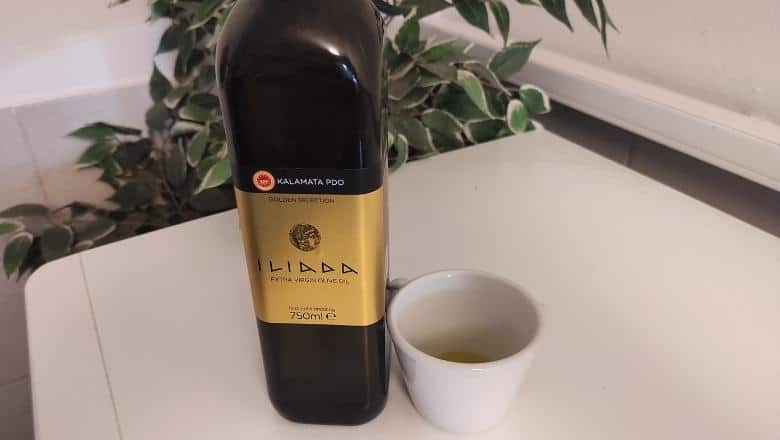
When it comes to making infused olive oil, the base oil you choose can significantly influence the final product’s flavor, health benefits, and overall quality. It’s important to choose wisely; in my experience, high-quality extra virgin olive oils are the best option.
Why?
Extra virgin olive oil is rich in antioxidants, particularly polyphenols, which are known for their numerous health benefits.
Among the diverse range of olive oils available in the market, here are my personal favorites:
- Greek Olive Oils: Known for their robust flavor and high polyphenol content, Greek olive oils add a layer of complexity to any infusion. They’re versatile, enhancing the flavor of any herb or spice you choose to infuse. (Check my Greek Olive Oil recommendation here)
- Spanish Olive Oils: Spanish olive oils are diverse in flavor profiles, ranging from fruity to bitter. This variety gives you plenty of options when deciding on the taste direction of your infusion. (Check my Spanish Olive Oil recommendation here)
- Turkish Olive Oils: Turkish olive oils are renowned for their unique, slightly pungent flavor. They pair well with strong, aromatic herbs and add a distinctive touch to your infusion. (Check my Turkish Olive Oil recommendation here)
If you’re infusing something delicate — lemon peel, basil, a mild herb blend — a gentler oil serves you better than a peppery one that fights the ingredient. Milder Italian olive oils work well for those. Save the assertive, grassy oils for garlic, chili, and rosemary, which can hold their own.
Remember, the secret to a remarkable infused olive oil lies in starting with a quality base. With these recommendations, you’re well on your way to creating an infused olive oil that’s not only delicious but also rich in health benefits.
What Are The Best Herbs To Make Infused Olive Oil

Selecting the right herbs for your infused olive oil can feel like an exciting adventure. While there’s no definitive answer, some herbs and ingredients have been widely embraced for their ability to complement olive oil’s rich, fruity flavor beautifully.
Most common herbs used for making infused olive oil:
- Garlic: One of the most popular choices, garlic lends a savory depth that pairs wonderfully with olive oil. Roast it first — see the section above — and it becomes sweeter and safer at the same time.
- Chili: For those who enjoy a kick, chili adds a fiery dimension that contrasts beautifully with the smoothness of olive oil. Dried chili flakes are far easier to work with than fresh, and the heat builds over the first week.
- Citrus: Citrus peels, such as lemon or orange, impart a fresh, zesty note, creating a bright and vibrant infused oil. Peel only the coloured zest and leave the white pith behind — the pith turns the oil bitter.
- Cannabis: Cannabis-infused olive oil has gained popularity in recent years for its potential health benefits and unique flavor.
- Mediterranean Herbs: Basil, oregano, rosemary, and other Mediterranean herbs are traditional choices. Their aromatic profiles blend harmoniously with olive oil, making them a safe and delicious bet. Rosemary and thyme dry beautifully and are the most forgiving for a first attempt; basil is the trickiest, because it loses a lot of its character once dried.
One thing I’d avoid: anything with high water content that you can’t dry or roast properly. Fresh tomato, fresh ginger, soft fruit. They sound appealing, they infuse poorly, and they cut your shelf life to almost nothing.
In the end, the choice of the herb is a personal one, guided by your individual taste. But these recommendations offer a starting point for anyone eager to embark on the journey of making infused olive oils. The ultimate goal is to enhance your culinary creations and elevate your dining experience, so keep that in mind.
5 Infused Olive Oil Recipes To Try First
If you want to skip the guesswork, here are five combinations I keep coming back to. All of them use the cold method above, and all quantities assume roughly 2 cups (500 ml) of extra virgin olive oil.
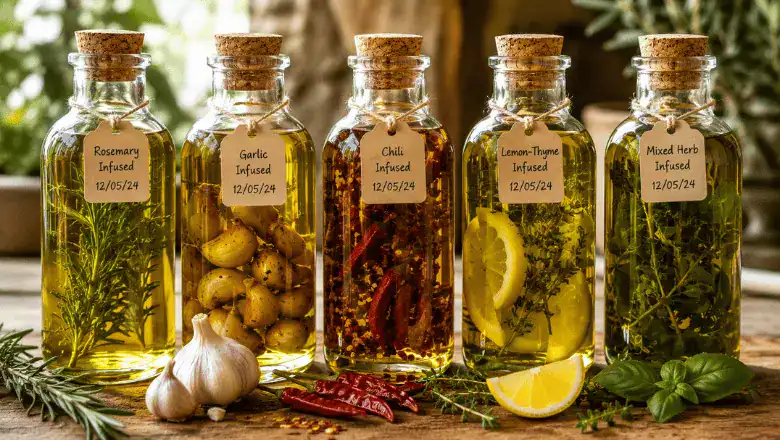
1. Rosemary Infused Olive Oil
Four or five thoroughly dried rosemary sprigs per 2 cups of oil. This is the one I’d start with — rosemary is robust, dries easily, and the infusion is hard to get wrong. Ready in about 10 days. Perfect over roast potatoes and lamb.
2. Roasted Garlic Infused Olive Oil
Eight to ten peeled garlic cloves, roasted until soft and golden, then cooled completely. Two weeks in the jar. The result is sweeter and rounder than any raw-garlic version, and it’s what I reach for when I’m making bread dipping oil.
3. Chili Infused Olive Oil
Two tablespoons of dried chili flakes, or five to six whole dried chilies. Taste it after a week — chili is the one infusion that can genuinely get away from you if you leave it too long. Once it’s where you want it, strain immediately.
4. Lemon And Thyme Infused Olive Oil
The dried zest of two lemons plus three or four dried thyme sprigs. Peel the zest in strips with a vegetable peeler, avoiding the pith, and dry it fully before it goes anywhere near the oil. Bright, fresh, and excellent on fish and grilled vegetables.
5. Mediterranean Herb Blend
Equal parts dried oregano, rosemary, and thyme, filling about a third of the jar, with a few black peppercorns thrown in. This is the closest thing to the flavor of a Croatian summer table, and it’s my default when I’m making a batch as a gift.
How To Store Infused Olive Oil
Store infused olive oil in a sealed, sterilized dark glass bottle, in a cool cupboard away from light and heat. Oils made with dried ingredients keep at room temperature; anything made with fresh ingredients belongs in the fridge.
Light is the enemy here. Those beautiful clear bottles with a sprig of rosemary suspended inside look wonderful on a windowsill and will ruin your oil faster than anything else you could do to it. If you want the decorative version, keep it in the cupboard and bring it out when you’re using it.
Two more habits worth having: label every bottle with the date it was made, and don’t decant into a bottle much larger than you need. Every time you open it, air goes in, and air is what turns oil rancid. The general principles are the same as storing olive oil after opening, just with a shorter clock.
For the full breakdown of shelf life by method and ingredient type, I’ve covered how long infused olive oils last in a separate guide.

What Is Infused Olive Oil Good For?
Infused olive oil serves as a versatile weapon in any culinary arsenal. Its primary function is to add an extra dimension of flavor to your dishes, but its applications in the kitchen are virtually limitless.
As a salad dressing, infused olive oil can transform a simple salad into an exciting flavor experience. The oil carries the aroma and taste of the herbs, infusing each bite with those flavors.
But where infused olive oil truly shines is in marinades. Marinating meat and fish in infused olive oil can profoundly enhance their flavor.
I have a particular fondness for using my homemade infusions when marinating chicken and seafish, like sea bass. The oil penetrates the meat or fish, imparting the infused flavors and making every bite a delight, especially when grilling.
It’s also the easiest bread dipping oil you’ll ever make — a shallow dish of herb or garlic infusion, a crack of pepper, good bread, done. And as a finishing oil, a spoonful over soup, roasted vegetables, or a plate of pasta right before serving adds more than the same oil stirred in during cooking ever would. Heat drives off the aromatics you spent two weeks developing, so add it at the end.
One last use worth mentioning: a couple of bottles of homemade infusion, labelled by hand, make a genuinely good gift for an olive oil lover. It costs very little and looks like you spent a fortune.

The personalized touch that infused olive oil lends to your dishes sets them apart from what you’d typically find in a restaurant. It’s a simple way to bring a unique, gourmet touch to your home cooking.
FAQ On Infused Olive Oils
Absolutely! Making infused olive oil at home allows you to customize flavors to your liking, making your dishes more personalized and unique. Plus, homemade infusions often have a fresher, richer taste compared to store-bought versions.
Cold infusion takes 10 to 15 days, while heat infusion is ready in a couple of hours. The cold method is slower but gives you a better-tasting oil with a longer shelf life, which is why it’s the one I use and recommend.
Infused olive oils, if they’re made from fresh olive oil and with a cold infusing method, can last up to 12 months if stored properly. Infused oils made with heat infusing method have a much shorter shelf life, usually up to 6 months if stored properly. But that’s all if you’re using dry ingredients. Using wet ingredients reduces the shelf life of flavored olive oils a lot.
You can, but the oil must be refrigerated and used within a few days rather than stored in the pantry. Fresh herbs carry moisture, and moisture in oil creates the conditions that allow harmful bacteria to grow. Drying your herbs first is both safer and, in my experience, produces a cleaner flavor.
Only if it was made with fresh or wet ingredients such as raw garlic, fresh herbs, or citrus peel. Infusions made entirely with properly dried ingredients are fine in a cool, dark cupboard. When in doubt, refrigerate — the oil may cloud or solidify slightly in the fridge, but it clears again at room temperature.
The signs of infused olive oil going bad include cloudiness, discoloration, an off smell, and an unpleasant taste. Always trust your senses; if the oil looks, smells, or tastes off, it’s likely time to discard it.
Yes, it is possible to over-infuse olive oil. If too many herbs or spices are used, the oil can become overpowering. For beginners, I recommend starting with a smaller amount of herbs and spices and then gradually adjusting to your taste preference over time.
Absolutely, you should dry herbs before infusing them into olive oil. Wet ingredients can introduce moisture, which reduces the shelf life of your infused oil and may cause it to spoil rapidly. For ingredients like garlic, a quick roast before infusing can enhance the flavor and extend the oil’s shelf life. Using wet ingredients is possible, but you need to be extremely cautious, and the shelf life will be very short.
In everyday use the terms are interchangeable, but there’s a real distinction on the shelf. Infused oils get their taste from actual ingredients steeping in the oil. Some commercial flavored oils get theirs from added aromas or essences mixed into a cheap base oil. Check the label — if it lists “natural flavoring” rather than the ingredient itself, it’s the second kind.