
5 Best Moroccan Olive Oil: High-Polyphenol Extra Virgin Picks in the USA

Olive Knowledge is a part of Amazon Associates. As an Amazon Associate, we earn from qualifying purchases. Read our Affiliate Disclosure to learn more.
Morocco is ranked as the fifth-largest producer of olive oil in the world, producing 200 thousand tonnes of olive oil per season. Moroccan olive oil benefits from fertile soil that is rich in nutrients and favorable weather — but what really sets it apart is the exceptionally high polyphenol content you’ll find in the best Moroccan extra virgin olive oils.
In this post, I’ll share with you my favorite olive oils from Morocco — five of the best Moroccan oils you can buy in the USA. All five are rich in polyphenols, certified organic, and cold-pressed. If you want to learn more about the health benefits of extra virgin olive oil, I have a full guide on that topic as well.
I’ll keep the post updated, so whenever the list changes (e.g., I discover some better oils), I’ll update this list.
The Best Moroccan Olive Oils – My Top 5 Picks for You
Before diving into the detailed reviews, here’s a side-by-side comparison of all five Moroccan olive oils on this list:
| Feature | Atlas Organic | Desert Miracle | Mina | Morocco Gold | Les Terroirs de Marrakech |
|---|---|---|---|---|---|
| Polyphenols | 300+ mg/100g | High (not specified) | High (not specified) | 606 mg/kg | High (not specified) |
| Acidity | Very low | Max 0.2° | Less than 0.2% | Low | Low |
| Organic Certified | Yes (USDA + EU) | Yes (USDA + EU) | No | No | Yes (USDA) |
| Carbon Neutral | Yes | Yes | No | No | Yes |
| Cold Pressed | Yes | Yes (First) | Yes | Yes (First) | Yes (First) |
| Single Estate | Yes | Yes | Yes | Yes | Yes |
| Best For | Cooking, baking | Dipping, finishing | All-purpose | Health-focused use | Dipping, salads |
| Size Options | 750ml, 1L, 3L, 5L | 500ml | 2L (68 fl oz) | 500ml | 500ml |
1. Atlas Organic Cold Press Extra Virgin Olive Oil

Atlas Organic Cold Press Extra Virgin Olive Oil is my top pick, and it’s the one I reach for most often. It’s extracted through methods like crushing, malaxation, and separation — if you’re curious about the full process, check out my guide on how olive oil is made. The olives are processed into a homogeneous paste after being removed from their leaves. In order to preserve all of its qualities, this paste is then combined and macerated at a temperature of no more than 25°C.
Oil is then removed from the paste during its passage through the centrifugal machine, keeping its flavorful fragrance. You’ll adore the richly varied aroma, which includes a blend of delicious bananas, lemons, basil, almonds, and gourmet herbs. Your palate will also enjoy its flavor and delicateness.
The oil is 100% safe because it does not include any harmful additives or chemicals. This mildly complex olive oil works well in baking, desserts, and general cooking.
What I like about Atlas:
- Early harvest with 300+ mg/100g of antioxidant-rich polyphenols
- Superior quality, chosen by prestigious chefs — 10 Michelin-starred restaurants use Atlas oils
- Certified Organic by both the European Union and USDA
- Chemical-free with maximum health benefits
- Available in multiple sizes, including a very cost-effective 3L tin
Another thing that I want to mention is that Atlas, as a whole company, is a carbon-neutral certified company — meaning that they do not badly affect the environment while making one of the best olive oils you can find in the USA. The Aqallal family has been producing olive oil in Morocco since 1887 — that’s over 130 years of expertise. Their groves span roughly 600 hectares at the foothills of the Atlas Mountains, using cultivars like Picholine du Languedoc, Menara, Haouzia, and Dahbia.
What to know: Atlas olive oil has a mild, approachable flavor profile. If you prefer a strong peppery kick, Desert Miracle or Morocco Gold might be better suited. But for everyday cooking and baking, Atlas is hard to beat.
2. Desert Miracle Cold Pressed Polyphenol Rich Moroccan Olive Oil

Desert Miracle Cold Pressed Polyphenol Rich Moroccan Olive Oil is a very sweet and delicate oil with a strong pepper kick. This oil has a sweet finish and is both appealing and slightly complex. You can use it for many types of cuisine, especially baking and desserts.
It tastes like culinary herbs, sorrel, cucumber, red berry fruits, and nuts. The bitterness is mild, but there is a lot of pepper, which intensifies before fading, bringing back the green herbs, almonds, and sweet biscuits. Fudge, sweet banana, and a little hint of hazelnut chocolate make up the intriguing aftertaste.
Almonds, lemon, culinary herbs with a hint of basil, and sweet banana are all components of this delightfully rich aroma. There is also a faint hint of soggy grass and wooded hedgerows. No matter what it is served with — fresh or cooked vegetables, fish, poultry, or even meats — this oil overpowers almost everything.
What I like about Desert Miracle:
- Gold Medal winner at the Los Angeles International Olive Oil Competition
- Extra virgin with a maximum acidity of 0.2° and a unique taste
- Certified Organic by the European Union and USDA Organic
- High polyphenol, first cold pressed
- Preferred by the world’s top chefs
What to know: Desert Miracle is produced on a desert plateau from Arbequina and Dahbia olives. It’s unfiltered and extremely nutrient-dense. The peppery finish is quite pronounced — this is an olive oil for people who appreciate bold flavor. It’s one of the most decorated Moroccan olive oils in international competitions. Best enjoyed raw for dipping, drizzling on salads, or finishing dishes.
3. Mina Moroccan Extra Virgin Olive Oil
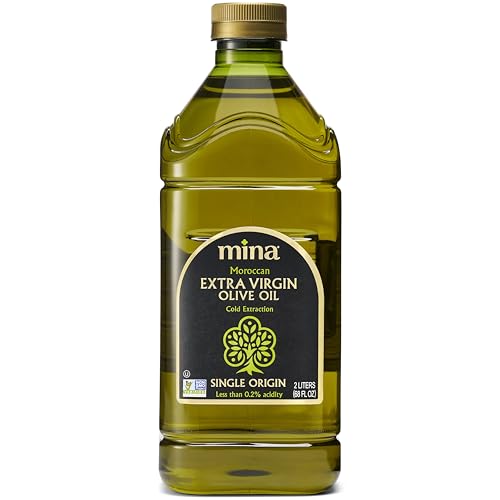
Mina Moroccan Extra Virgin Olive Oil is a single origin movement pioneer, providing complete traceability all the way down to the tree. They are harvested early and quickly cold-extracted for optimal nutrition and quality. Their fresh extra virgin olive oil is prepared entirely from olives grown there.
This superb extra virgin olive oil, which has a smooth and delicate flavor, improves every meal. It is excellent for a variety of uses, including drizzling, dipping, sautéing, roasting, baking, marinating, dressing, and finishing.
It has low acidity (less than 0.2%) and a high content of antioxidant-rich polyphenols, which are beneficial for heart and brain health, among other things.
What I like about Mina:
- A smooth blend with subtle notes of pepper and herbs
- Rich in polyphenols, antioxidants, and heart-healthy monounsaturated fats
- Kosher, without Trans Fat, and Non-GMO Project Verified
- Gluten-free, soy-free, dairy-free
- No sugar, preservatives, artificial color, or flavoring
- Third-party tested and clinically proven
What to know: Mina stands out for its traceability and third-party testing — something not all Moroccan olive oil brands can claim. The 2L (68 fl oz) bottle also makes it one of the best value-for-money options if you go through olive oil quickly. If you’re someone who likes to cook with olive oil daily, the large format makes a lot of sense.
4. Morocco Gold Single Estate Extra Virgin Olive Oil
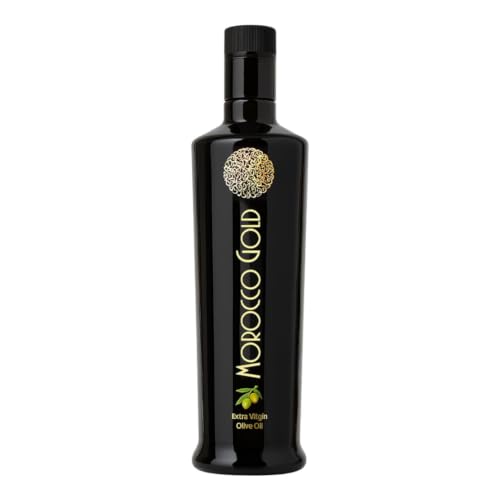
Morocco Gold Single Estate Extra Virgin Olive Oil is a natural, unfiltered, polyphenol-rich olive oil from Morocco. Morocco Gold offers exceptional taste and health-enhancing properties through proper testing and strict adherence to single estate sourcing, making it the ideal extra virgin olive oil alternative for health-conscious food lovers.
Early in the season, hand-harvested olives for Morocco Gold are first cold-pressed within a day. To assure true extra virgin quality, there is no blending or combining with other oils. These olives, which are abundant in polyphenols, give Morocco Gold its green color fruitiness, hints of sweet almonds, fresh turf, and a hint of herbs. It possesses the distinctive “pepperiness” of a fine extra virgin olive oil, which gives Morocco Gold a crisp, well-balanced finish.
What I like about Morocco Gold:
- Polyphenol count of 606 mg/kg — one of the highest among commercially available Moroccan olive oils
- Made exclusively from Picholine Marocaine olives
- Grown in a valley at about 2,000 feet above sea level in the Atlas Mountains foothills
- Hand-harvested and first cold-pressed within 24 hours
- Single estate — never blended with other oils
What to know: Morocco Gold is the most health-focused option on this list. With a documented polyphenol count of 606 mg/kg, it significantly exceeds the EFSA threshold for health claims. The groves are located in the Beni Mellal region, where hot Saharan winds and mineral-rich soils create ideal stress conditions for polyphenol development. If your primary reason for buying Moroccan olive oil is the polyphenol content, Morocco Gold is the brand that publishes specific numbers.
- Keeps the digestive system in good condition
- Reduces the risk of cardiovascular diseases and blood pressure
- Beneficial impact on gastritis and ulcers
- Lessens the severity of asthma or arthritis
- Helps control healthy cholesterol levels and prevent diabetes
5. Moroccan Organic Extra Virgin Olive Oil Les Terroirs de Marrakech

Moroccan Organic Extra Virgin Olive Oil Les Terroirs de Marrakech is medium to strong and extremely well-balanced. Pepper and bitterness are never overly strong. This oil is excellent and can be compared to oils of a similar style from other parts of the world. As a single variety, it could easily compete.
This oil is ideal for dipping and a variety of culinary combinations. Has a complex green aroma that includes apples, mowed grass, hedgerows, and culinary herbs. Additionally, there are undertones of tomato, almonds, and fresh lemon. More dried fruits and herbs are present in the lingering aftertaste, which is followed by a hint of malted nuts and milk chocolate.
What I like about Les Terroirs de Marrakech:
- One of the very first carbon-neutral olive oils in the world
- First cold-pressed
- Rich in polyphenols, completely chemical-free
- USDA-certified organic, OU Kosher for Passover, Halal, HACCP, and GMP certified
- Cholesterol and carbohydrate-free
- Produced on a historic Moroccan orchard with over two centuries of cultivation
What to know: Les Terroirs de Marrakech is actually part of the Atlas Olive Oils family, so you’re getting the same commitment to quality and sustainability. What sets it apart is its flavor profile — it’s more complex and robust than the standard Atlas oil, with a green, herbal character that works beautifully for dipping with fresh bread and finishing dishes. If you enjoy tasting olive oil and appreciating the nuances, this is a fantastic choice.
How to Choose the Best Moroccan Olive Oil
With so many Moroccan olive oil brands on the market, it can be overwhelming to pick the right one. Here are the key things I look for when choosing a high-quality olive oil from Morocco:
Check the polyphenol content. The higher, the better — but anything above 250 mg/kg qualifies for the EU health claim. Some brands like Morocco Gold publish exact numbers (606 mg/kg), while others like Atlas state “300+ mg/100g.” If a brand doesn’t mention polyphenols at all, that’s a red flag. Learn more about the importance of harvest dates on olive oil labels.
Look for “first cold pressed” or “cold extracted.” This means the oil was produced at temperatures below 27°C, which preserves the polyphenols and antioxidants. All five oils on my list meet this standard.
Organic certification matters. Organic olive oil is produced without synthetic pesticides or fertilizers, which is especially important if you’re consuming olive oil daily for health benefits. Three of my five picks — Atlas, Desert Miracle, and Les Terroirs de Marrakech — carry USDA Organic certification.
Single estate or single origin is a good sign. This means the oil comes from one farm or region, rather than being a blend of oils from different countries. Blending is one of the most common practices in low-quality olive oils, and single-estate sourcing gives you traceability.
Consider how you’ll use it. For cooking, baking, and everyday use, Atlas Organic’s mild profile works great. For finishing, dipping, and drizzling, the bolder flavors of Desert Miracle or Morocco Gold shine. And the International Olive Council is a great resource for understanding olive oil grades and standards.
Why Is Moroccan Olive Oil So High in Polyphenols?
If you’ve been researching polyphenol-rich olive oil from Morocco, you’ve probably wondered what makes it special. The answer comes down to three things: climate, soil, and olive varieties.
Morocco’s olive groves — especially those in the foothills of the Atlas Mountains — experience a semi-arid climate with extreme temperature swings between hot days and cool nights. This “stress” on the olive trees is actually beneficial: when olive trees struggle, they produce more protective compounds, including polyphenols. It’s essentially the tree’s defense mechanism.
The soil in Morocco’s main olive-growing regions is mineral-rich, with naturally occurring phenolic compounds. These phenols get absorbed by the olive tree’s root system and eventually make their way into the fruit itself.
On top of that, the primary Moroccan olive variety — Picholine Marocaine — is naturally predisposed to higher polyphenol levels compared to many European cultivars. Combined with early harvesting practices, this results in Moroccan olive oils that routinely reach 300–800+ mg/kg of polyphenols.
For context, the European Food Safety Authority (EFSA) has approved a health claim for olive oils containing at least 250 mg/kg of polyphenols, stating that olive oil polyphenols contribute to the protection of blood lipids from oxidative stress. Many of the Moroccan olive oils on this list exceed that threshold by a wide margin.
[IMAGE: Moroccan olive grove in the Atlas Mountains foothills with olive trees on rocky terrain] Alt text: Moroccan olive grove in the Atlas Mountains — the harsh climate produces olive oil high in polyphenols
If you’re specifically looking for the absolute highest polyphenol count from Morocco, OLIVIE PLUS 30X takes it to another level — with around 1,250 mg/kg of polyphenols and 233 mg/kg of hydroxytyrosol. It’s made from desert-grown olives by the same family behind Atlas Olive Oils.
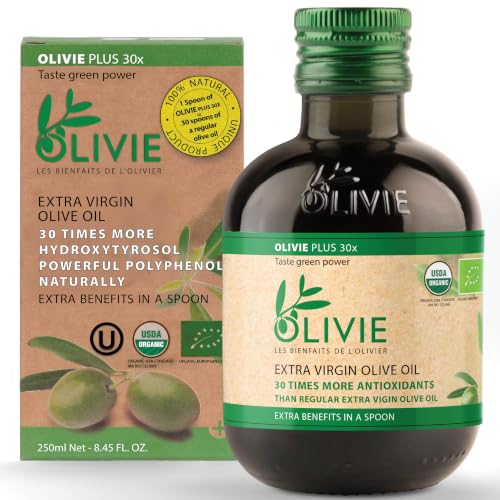
That said, for everyday cooking and drizzling, any of the five oils below will give you an excellent polyphenol boost without the premium price tag of a supplement-grade product.
Frequently Asked Questions
Moroccan Picholine (also called Picholine Marocaine), Haouzia, and Menara are Morocco’s most popular olive varieties. The Picholine Marocaine is by far the most widely cultivated and is known for producing oils with naturally high polyphenol content. Some producers also use Dahbia and Arbequina varietals, often blending them with Picholine for a more complex flavor profile.
Yes. Morocco is the world’s 5th largest producer and exporter of olive oil, with an average production of 140,000 tons annually, owing to a high-quality infrastructure that meets international standards. Most exports go to the United States, Europe, and the Middle East. In recent years, demand for Moroccan olive oil in the USA has grown significantly, driven by the interest in high-polyphenol oils.
“Better” depends on what you’re looking for. Moroccan olive oil tends to have higher polyphenol levels than most Italian and Spanish olive oils due to the harsh growing conditions in the Atlas Mountains region. However, Italian oils (especially from Sicily and Puglia) and Spanish oils (especially Picual variety from Jaén) can also be exceptionally high in polyphenols. If you’re curious, you can compare my picks for the best Italian olive oils and the best from other Mediterranean countries. Each region has its own terroir, and the “best” olive oil is the one that matches your taste preferences and health goals.
Moroccan extra virgin olive oils are incredibly versatile and excellent for cooking and flavoring ingredients. They’re becoming increasingly popular as dressings for salads and pasta, for finishing cooked dishes, and for dipping with bread and raw vegetables before a meal. Higher-polyphenol oils like Morocco Gold and Desert Miracle are particularly good consumed raw (drizzled or as a supplement shot) to maximize the health benefits, since some polyphenols degrade at high temperatures.
Premium Moroccan olive oils tend to cost more than mass-produced supermarket olive oils for several reasons: early harvesting (which yields less oil per tree), organic farming practices, small-batch cold extraction, and quality testing. The carbon-neutral certification that companies like Atlas carry also adds to production costs. That said, compared to other ultra-premium olive oils from Italy or California, Moroccan oils often offer better value — especially the Atlas 3L tin, which brings the per-liter cost down significantly.
Polyphenol-rich olive oil has a distinctive peppery and slightly bitter taste — that “catch” you feel in the back of your throat is actually a good sign. It’s caused by oleocanthal, one of the most beneficial polyphenols. The higher the polyphenol content, the more pronounced this pepperiness tends to be. If you’re new to this, start with Atlas Organic (which is milder) and work your way up to Desert Miracle or Morocco Gold. You can also check out my guide on how to taste olive oil properly.
Store your Moroccan olive oil in a cool, dark place away from heat and sunlight. Never leave it next to the stove or in a window. Keep the bottle tightly sealed after each use. Under proper conditions, a high-quality extra virgin olive oil lasts 18–24 months from the harvest date, but the polyphenol content decreases over time, so fresher is always better. For a full breakdown, check my guide on how to store olive oil after opening.
Yes. The high polyphenol and vitamin E content in Moroccan extra virgin olive oil makes it a popular natural moisturizer. It’s been used in traditional Moroccan skincare for centuries. However, for skin and hair use, don’t confuse Moroccan olive oil with Moroccan argan oil — they come from completely different plants. If your primary goal is skin care, argan oil is typically better suited, but EVOO works well as a moisturizer and hair treatment in moderation.
If you’re interested in olive oils from other countries, make sure to check: